


How to Give Sadaqah in Ramadan: Ways to Give Charity
07 Sep, 2026To give Sadaqah in Ramadan, donate any amount through verified humanitarian organisations, local mosques, or secure online charity portals supporting food banks, medical care, and emergency aid. Feed those fasting by providing Iftar or Suhoor meals, contribute to Sadaqah Jariyah projects such as water wells or schools, and increase giving during the last ten nights, particularly Laylatul Qadr, when rewards are greatest.
For UK Muslims, a simple Ramadan routine can help separate voluntary Sadaqah from Zakat and Fitrana while supporting Sadaqah Jariyah and using a Zakat calculator properly.
What Is Sadaqah In Ramadan For UK Muslims?
Sadaqah is voluntary charity given for the sake of Allah. It can be money, food, time, useful knowledge, emotional support, or any sincere act that eases someone else's difficulty. In Ramadan, Sadaqah becomes especially meaningful because Muslims are already focused on worship, self-restraint, gratitude and compassion.
It is not limited to large donations, which is reassuring if your budget is looking a little nervous after the weekly shop. Even a small regular amount, given sincerely, can become a beautiful habit.
For UK Muslims, Sadaqah often takes several forms at once. Some people support local food banks, mosque Iftar programmes, vulnerable neighbours or family members facing hardship. Others give to global emergency relief, medical care, clean water, food boxes, or cash assistance for families in crisis.
Donate Directly supports this by sending cash directly to people in need through an AI-powered charity platform with no middlemen, no delays and a 0% platform fee. Its AI verification and detailed case reviews help ensure support reaches the right people quickly and transparently.
How To Give Sadaqah In Ramadan Through Everyday Actions
The easiest way to give Sadaqah in Ramadan is to plan a mix of daily giving, local kindness and long-term projects. You might give £1 after Fajr, sponsor an Iftar meal, help a neighbour with shopping, support a water project, or set aside a larger amount for the last ten nights.
The point is not to make charity feel like a spreadsheet, although a little planning does help. It is to build a rhythm that keeps giving present throughout the month.
Daily Cash Giving: Set aside a small amount each day, even if it is £1, and give it with sincerity.
Iftar Meal Support: Help provide Iftar or Suhoor meals through a mosque, food bank, local family, or trusted charity project.
Clean Water Projects: Support access to safe water through wells, water systems, or community water funds.
Olive Tree Planting: Contribute to a long-term project that may provide food, income, shade, or ongoing benefit.
Family Hardship Help: Quietly support relatives, neighbours, students, or vulnerable people who may be struggling.
Medical Emergency Aid: Give towards urgent treatment, medication, hospital support, or emergency health costs.
Local Food Support: Donate food items, supermarket vouchers, or cash to food banks and community kitchens.
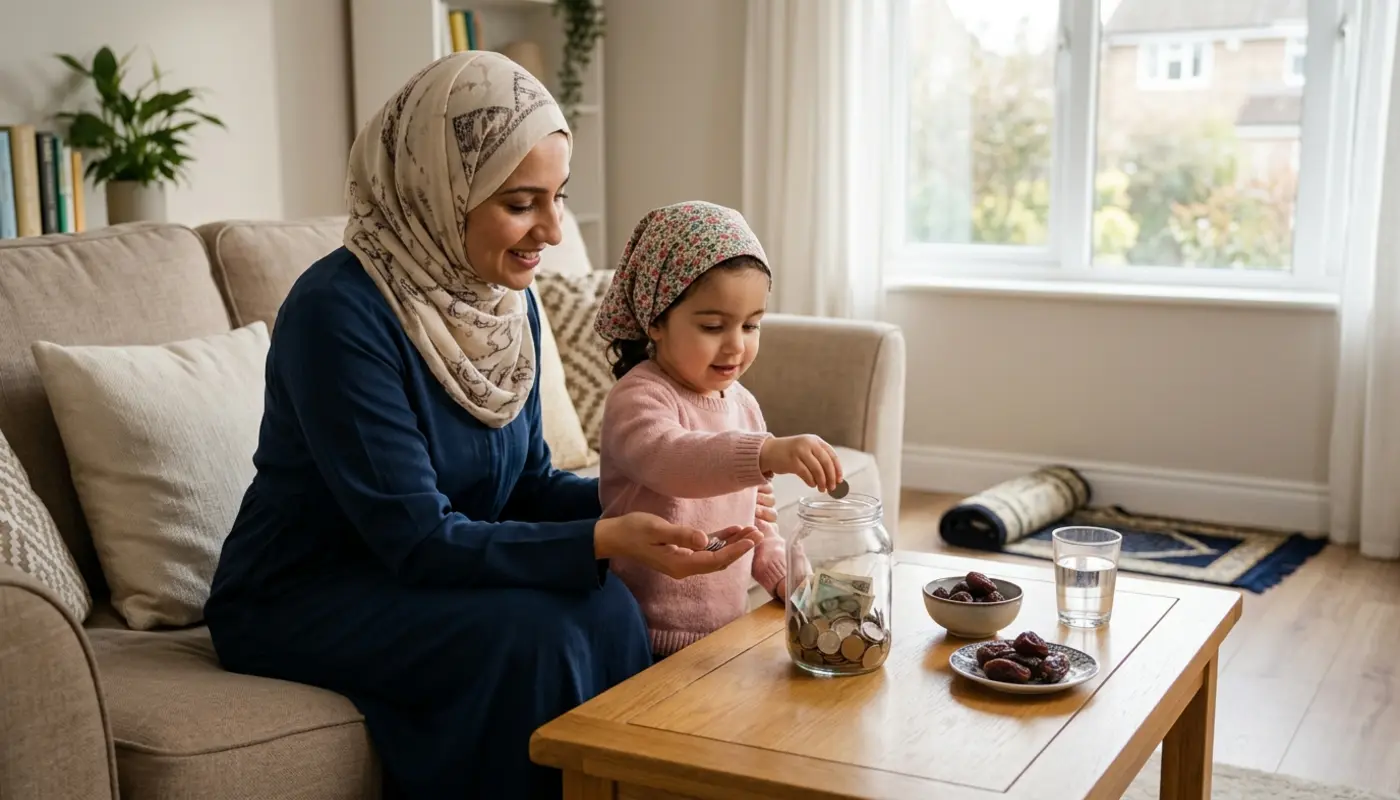
Many UK families also involve children by giving them a small Ramadan charity jar. It teaches generosity without turning it into a lecture, which is always a win. You can encourage children to choose between feeding someone, helping an orphan, planting an olive tree, or supporting clean water.
Donate Directly provides Sadaqah Jariyah options such as olive tree planting, water wells, food boxes and Palestinian dates tins, which can make the impact easier to understand. When children see charity as practical and human, they are more likely to carry it beyond Ramadan.
Why Ramadan Is The Most Rewarding Time To Give Sadaqah
Ramadan is a month of mercy, forgiveness and increased worship. Muslims fast to build taqwa, but fasting also softens the heart towards people who live with hunger and uncertainty every day.
The Prophet Muhammad, peace be upon him, was known for his generosity, and reports describe him as especially generous in Ramadan. That example gives Muslims a clear direction: worship is not only private devotion, but also active care for others.
The Qur'an repeatedly praises those who spend from what Allah has provided. One well-known verse compares charity given sincerely to a grain that grows into many ears, each carrying many grains. For readers who want to check the wording, the verse can be read through this Qur'an reference.
The lesson is simple enough for everyday life: sincere charity is never wasted. You may see the money leave your account, but the reward and relief it creates are far bigger than the transaction itself.
Feeding the fasting is one of the most loved forms of Ramadan charity. In the UK, this can mean supporting mosque Iftar meals, helping students who are away from family, taking food to elderly neighbours, or contributing to food banks during cost of living pressure.
Internationally, it can mean providing food boxes to families in Gaza, Pakistan, Yemen and beyond. Donate Directly has delivered over $10 million in direct cash assistance to families worldwide, including verified Zakat-eligible campaigns, which shows how digital giving can meet urgent needs at speed.
What The Qur'an And Hadith Teach About Sincere Giving
Islamic teaching places strong emphasis on intention. Sadaqah is not just about the amount given, but why and how it is given. Giving with humility, avoiding showing off, and not making the recipient feel small are all part of beautiful charity.
If you have ever helped someone quietly and felt a calmness afterwards, that is the spirit Sadaqah encourages. It protects dignity as much as it relieves need.
Hadith literature also teaches that many good deeds count as charity. A smile, removing harm from a path, helping someone carry a burden, sharing beneficial knowledge, or speaking kindly can all be forms of Sadaqah when done sincerely.
This matters because not everyone can give large sums every day in Ramadan. Students, parents, carers, people on benefits, and those managing debt can still take part. Sadaqah should open the door to goodness, not make people feel priced out of reward.
What Types Of Sadaqah Can UK Muslims Give During Ramadan?
UK Muslims can give Sadaqah in many useful ways during Ramadan. The best choice usually depends on your budget, local needs, and the type of impact you want to support.
Immediate relief may include food parcels, Iftar meals, emergency cash support, clothing, shelter support, medical aid, or help with essential bills. These forms of Sadaqah can bring fast relief to people facing urgent difficulty.
Longer-term giving may include water wells, education, olive tree planting, community facilities, or projects that continue benefiting people after Ramadan ends. A balanced plan often includes both immediate support and Sadaqah Jariyah, so your charity helps people now and continues to benefit them later.
How Sadaqah Differs From Zakat Al-Fitr For UK Muslims
One common confusion is the difference between Sadaqah, Zakat and Zakat al-Fitr, also called Fitrana or Sadaqat al-Fitr. Sadaqah is voluntary and flexible. You can give any amount, at any time, to support a wide range of good causes.
Zakat is an obligatory annual payment, normally 2.5% of qualifying wealth above the Nisab threshold. It has specific eligibility rules, so it is worth calculating it carefully rather than guessing and hoping for the best.
Zakat al-Fitr is different again. It is connected to the end of Ramadan and is due before the Eid prayer, so those in need can share in the joy of Eid. It is usually paid as a fixed amount per person in the household, based on staple food value or its cash equivalent according to scholarly guidance.
UK Muslims should check the current amount through a trusted local scholar, mosque or reliable Islamic organisation. You can also review Donate Directly's Fitrana page when planning your end of Ramadan giving.
The key point is that voluntary Sadaqah does not replace obligatory Zakat or Zakat al-Fitr. Think of obligations as the foundation and Sadaqah as the extra light you add on top. If you owe Zakat, calculate that first. Then plan Sadaqah around what you can afford. This keeps your worship balanced, responsible and free from last-minute panic on Eid morning.
How The Last Ten Nights Multiply Sadaqah Reward
The last ten nights of Ramadan are deeply special because they include Laylatul Qadr, the Night of Decree, described in the Qur'an as better than a thousand months. Many Muslims spread charity across all ten nights so they do not miss its reward.
This is a wise and practical approach, especially if your sleep pattern has turned into a mysterious Ramadan time zone. A small amount given each night can help you maintain consistency and hope for immense reward.
A simple method is to choose a total amount for the last ten nights and divide it equally. If your budget is £30, give £3 each night. If it is £100, give £10 each night. If you can give more, increase it, but avoid putting yourself under financial strain.
Sadaqah should be sustainable, not a dramatic gesture that leaves you anxiously checking your bank app at Suhoor.
Automation can help. You can set reminders, standing orders, or scheduled online payments to trusted projects. Donate Directly's direct cash assistance model can be particularly useful for urgent cases because verified support can reach families quickly without platform fees reducing the amount.
Giving during the last ten nights can include emergency relief, medical care, food support, or longer-lasting projects such as clean water.
How To Build A Daily Sadaqah Plan For Ramadan
A daily Sadaqah plan does not need to be complicated. Start by listing your essentials: rent or mortgage, bills, food, travel, debts and family responsibilities. Then decide what amount you can give without hardship.
For some, that may be £1 a day. For others, it might be £5, £10 or a larger weekly amount. The most important part is sincerity and consistency, not competing with someone else's donation screenshot.
Next, divide your giving into three areas. First, daily micro-giving, such as a small online donation or cash into a mosque collection. Second, weekly practical help, such as food bank items, visiting someone lonely, or supporting a family member quietly. Third, boosted giving in the last ten nights.
This approach means your Ramadan charity covers immediate relief, personal service and spiritual opportunity.
You can also set a theme for each week. Week one could focus on feeding people. Week two could support medical aid. Week three could fund Sadaqah Jariyah. The last ten nights could focus on hardship cases and direct cash support.
If you want to understand who can receive voluntary charity, Donate Directly's explains who is eligible for Sadaqah.
Can Ramadan Sadaqah Count As Sadaqah Jariyah?
Yes, Sadaqah given during Ramadan can count as Sadaqah Jariyah if it funds something with ongoing benefit. Sadaqah Jariyah means continuous charity, where the reward continues while people keep benefiting from the project.
Examples include water wells, trees that produce food or shade, beneficial knowledge, educational support, or facilities used for worship and community care. The Ramadan timing adds spiritual significance, but the ongoing nature comes from the project itself.
For UK Muslims, this is a powerful way to honour parents, deceased relatives or loved ones. You might fund part of a well, support olive tree planting, contribute to water access, or help with a community facility.
Donate Directly offers water wells and other long-term giving options, alongside direct emergency assistance. If you want more ideas, the Donate Directly guide on Sadaqah Jariyah ideas gives useful examples.
How UK Muslims Can Give Sadaqah Online Securely
Online Sadaqah is quick, convenient and often the easiest way to give consistently in Ramadan. Still, it is worth being careful. Use official websites, check that payment pages are secure, avoid random links sent through group chats, and look for clear information about where funds go.
In the UK, you can check registered charities through the Charity Commission register. A few minutes of checking can save a lot of worry later.
Transparency matters too. Look for clear case information, project updates, verification processes and fee details. Donate Directly uses AI verification and detailed case reviews to support quick, transparent direct cash giving.
Its 0% platform fee means the platform does not take a fee from the donation, which is particularly reassuring when you want every pound to work hard. For extra practical detail, read more about online Sadaqah.
The best online giving plan is one you can actually maintain. Save trusted pages, set reminders before Maghrib, and decide your amount for the last ten nights before the final stretch begins.
If you also need to separate Zakat from voluntary charity, Donate Directly's 100% Zakat information can help you think more clearly about eligible giving. With planning, Ramadan charity becomes less rushed and more intentional.
Frequently Asked Questions
Why Is Ramadan The Most Rewarding Time To Give Sadaqah?
Ramadan is a month of increased worship, mercy and generosity, and the Prophet Muhammad, peace be upon him, was especially generous during it. Giving Sadaqah in this month combines charity with fasting, du'a and sincere intention.
How Does Sadaqah In Ramadan Differ From Zakat Al-Fitr?
Sadaqah is voluntary and can be given at any time in any amount. Zakat al-Fitr is linked to the end of Ramadan and should be paid before the Eid prayer by those required to pay it.
What Types Of Sadaqah Should UK Muslims Give During Ramadan?
UK Muslims can give money, food, Iftar meals, time, support to relatives, local food aid, emergency relief and Sadaqah Jariyah projects. A balanced plan usually includes both local and global support.
How Do The Last Ten Nights Of Ramadan Multiply Sadaqah Reward?
The last ten nights include Laylatul Qadr, which is better than a thousand months. Many Muslims give every night during this period so their charity may fall on that blessed night.
Can Sadaqah Given During Ramadan Count As Sadaqah Jariyah?
Yes, if it funds something with lasting benefit, such as a water well, olive tree, education or beneficial community project. The ongoing benefit is what makes it Sadaqah Jariyah.