


Can I Give Sadaqah to Mosque? Explained
15 Jul, 2026Yes, you can give voluntary sadaqah to a mosque. However, compulsory charity such as zakat usually cannot be used for mosque building or running costs. That difference matters, especially if you want peace of mind that your donation is Islamically valid and handled correctly.
If you have ever stood by a Friday collection box unsure what your donation counts as, you are not alone. It can feel confusing, particularly in Ramadan when several collections take place at once. Here is a clear and simple explanation based on trusted scholarly views.
Can I Give Sadaqah To Mosque In Islam?
Yes, voluntary sadaqah can be given directly to a mosque and used for expenses such as electricity, maintenance, or expansion. Scholars from the four Sunni schools agree that optional charity is flexible and may support general good causes, including a masjid.
If you want to help keep your local mosque running, you can do so through voluntary sadaqah. That flexibility is part of the beauty of optional charity in Islam.
What Islamic Scholars Say About Giving Sadaqah To A Mosque
Classical and contemporary scholars state that voluntary sadaqah may be used for mosque needs. While compulsory charity must go to specific recipients, optional charity can support religious institutions and wider community benefit.
If you want a deeper look at who can receive voluntary charity, see who is eligible for sadaqah in Islam, which explains how broad sadaqah can be.
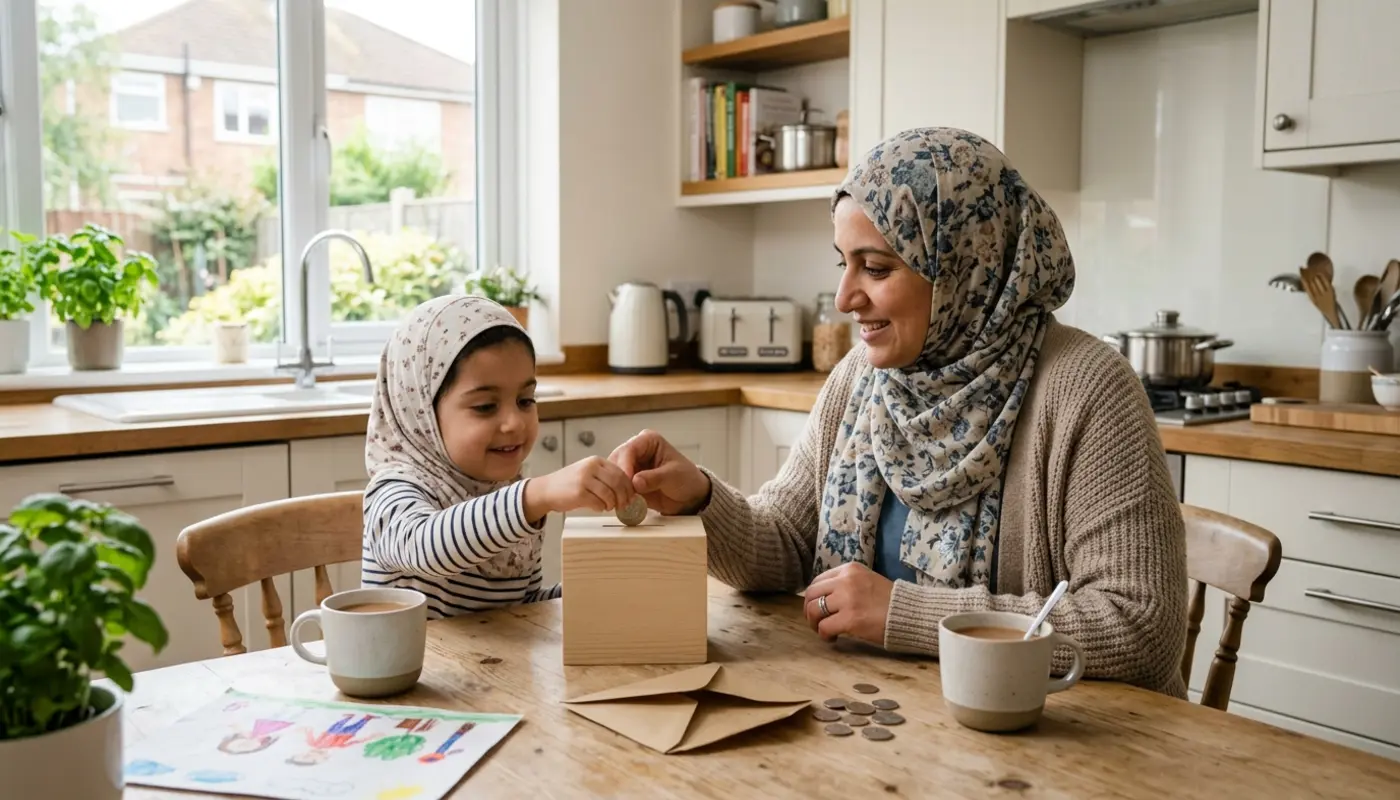
Sadaqah simply means charity given for the sake of Allah. It is not restricted in the same way as zakat. Many mosques in the UK rely on local voluntary donations to keep their doors open, pay bills, and run classes for children and adults. Without this support, many community services would not continue.
How Giving Sadaqah To A Mosque Differs From Lillah And Waqf Donations
These terms are often used together, which causes confusion. Sadaqah is general voluntary charity. Lillah usually refers to charity given purely for Allah, often for religious causes such as mosques or madrasahs. Waqf is an endowment where money or property is set aside permanently for a specific charitable purpose.
If the terminology feels unclear, the difference between sadaqah and lillah explains it in practical terms. In simple words, all lillah can be sadaqah, but not all sadaqah is structured as waqf.
Waqf donations often fund long term projects such as land purchase or building expansion. These may fall under ongoing charity. If you are thinking about long term impact, you might explore sadaqah jariyah ideas to understand how continuous reward works.
Can Zakat Be Given To A Mosque In The Same Way As Sadaqah?
In most mainstream scholarly opinions, zakat cannot be given directly to a mosque for construction, renovation, or bills. Zakat must be transferred into the ownership of eligible individuals, as mentioned in Surah At Tawbah 9:60. A building cannot own money, so it does not meet the condition known as tamlik, which means transfer of ownership.
You can review the categories of zakat recipients on the Wikipedia explanation of Zakat, which summarises the Quranic framework. The poor and needy are clearly listed, but mosque buildings are not included.
There is a minority contemporary view that in non Muslim countries zakat may sometimes support mosque construction due to necessity. However, most UK scholars advise caution. It is usually safer to keep zakat separate unless the mosque is clearly distributing zakat to eligible individuals on your behalf.
If you want to check your zakat before donating, you can use a reliable tool such as the AI Zakat calculator to calculate and allocate your funds correctly.
What Mosque Projects UK Muslims Can Support With Sadaqah
Voluntary sadaqah can support many important services. UK mosques are not only prayer spaces. They often act as community centres offering education, welfare support, counselling, and youth activities.
- Utility bills
- Building maintenance
- Quran classes
- Youth programmes
- Community welfare services
- Dawah outreach events
- Expansion and renovation
Supporting education is especially powerful because it spreads knowledge for years. Many scholars consider funding Islamic education a form of ongoing charity. If you want your donation to benefit someone after their passing, you may find sadaqah jariyah for deceased parents helpful.
Can Sadaqah Given To A UK Mosque Count As Sadaqah Jariyah?
Yes, it can, depending on how it is used. Sadaqah jariyah refers to ongoing charity that continues to benefit people over time. The Prophet Muhammad peace be upon him taught that when a person dies, their deeds end except for three, including ongoing charity.
If your donation helps build prayer facilities, fund classes, or support long term services, it may count as ongoing charity. For practical examples, see examples of sadaqah jariyah, which outlines projects that generate continuous reward.
The key is intention and lasting benefit. Paying one month of electricity is rewarded. Funding something that lasts for years may bring continuous reward. Both are valuable.
How To Check A UK Mosque Is Registered Before Donating
Before donating, check that the mosque is registered with the Charity Commission for England and Wales or the relevant body in Scotland or Northern Ireland. You can search by name or charity number on the official government website. Annual reports and financial summaries are usually available.
Transparent mosques clearly state whether a donation is sadaqah, zakat, or lillah. They keep funds separate and explain how money is used. This protects you and reflects the Islamic principle of amanah, meaning safeguarding what has been entrusted.
How To Give Sadaqah To A Mosque Online Securely
Most UK mosques now offer online donations through secure payment systems. Debit card, bank transfer, and standing order are common options. Check for secure website signs and clear fund descriptions before giving.
If you are exploring digital giving more widely, how to give sadaqah online explains what to look for in a safe platform.
Some Muslims choose to split their charity. Zakat may go to eligible families through platforms such as 100 percent Zakat verified distribution, while voluntary sadaqah supports their local mosque. This keeps everything clear and organised.
What Intention Should Be Made When Giving Sadaqah To A Mosque?
Intention, or niyyah, is simple. In your heart, intend that you are giving voluntary sadaqah for the sake of Allah to support the mosque and its work. You do not need special wording. Sincerity matters most.
If you are donating on behalf of someone else, such as a deceased relative, you can intend the reward for them. For guidance, see how to give sadaqah on behalf of someone.
Keep your intention clear and distinguish between sadaqah and zakat. That clarity avoids problems later.
Common Questions About Giving Sadaqah To A Mosque
Can I Donate Voluntary Sadaqah To My Local Mosque?
Yes, voluntary sadaqah can be given to a mosque for its expenses or community projects.
Is Lillah Different From Sadaqah?
Lillah usually refers to voluntary charity given for religious causes, while sadaqah is a broader term covering many types of voluntary giving.
Will Giving To A Mosque Count As Ongoing Charity?
It can, if the donation supports long term beneficial projects such as building work, education, or lasting community services.
Can I Use Zakat For Mosque Construction?
In most scholarly opinions, no. Zakat must be given to eligible individuals unless the mosque distributes it correctly on their behalf.
What Intention Should I Make When Donating?
Intend in your heart that you are giving voluntary charity for the sake of Allah to support the mosque and its community benefit.
Your local mosque is more than a building. It is where children learn their first surah, where families gather in Ramadan, and where support is offered in difficult times. Supporting it through voluntary sadaqah is a meaningful way to invest in your community and your akhirah while keeping your charity clear and compliant.