


Rebuilding Gaza: How Long-Term Donations Help Families Recover
20 Oct, 2026Rebuilding Gaza is a massive multi-decade undertaking estimated to cost approximately $70 billion, with over 60 million tonnes of rubble to clear and between 84% and 92% of structures damaged or destroyed, including over 300,000 homes. More than 70% of water and sanitation facilities have been severely damaged, alongside widespread displacement of roughly 1.9 million people. Donations today fund immediate relief whilst reconstruction begins.
UK donors can help right now by giving through transparent, accountable channels that explain whether funds support emergency relief, early recovery, long-term rebuilding, or all three. For donors who want a simple starting point, Donate Directly supports verified campaigns and direct cash assistance with no middlemen, no delays, and a 0% platform fee. Monthly support through a dedicated Gaza monthly route can also help families receive consistent help, not only during headline moments.
How UK Donors Can Contribute To Rebuilding Gaza Right Now
The most practical way to contribute is to choose a trusted organisation, read the appeal terms, decide whether your donation is Zakat, Sadaqah, or general charity, and give an amount you can sustain. Cash is usually more useful than sending goods because organisations can buy what families need, manage logistics, and respond as conditions change.
Rebuilding does not always mean laying bricks immediately. Before permanent reconstruction can happen, there may need to be rubble clearance, safety checks, access permissions, engineering assessments, local consultation, and reliable supply routes. A good appeal should be honest about that, rather than making it sound as though a whole neighbourhood can be rebuilt overnight.
Why Rebuilding Gaza Is A Long-Term Humanitarian Priority
Rebuilding Gaza matters because homes, clinics, schools, water systems, roads, electricity networks, and livelihoods are all connected. A family cannot safely return home if there is no clean water, no functioning clinic, no school for children, and no income to buy food.
International assessments have placed recovery and reconstruction needs in the tens of billions of dollars, with housing, water and sanitation, health, education, transport, power, and economic recovery among the major priorities. Donations today can keep families alive while also preparing the ground for safer, more durable recovery.
Relief, Recovery And Reconstruction Are Not The Same
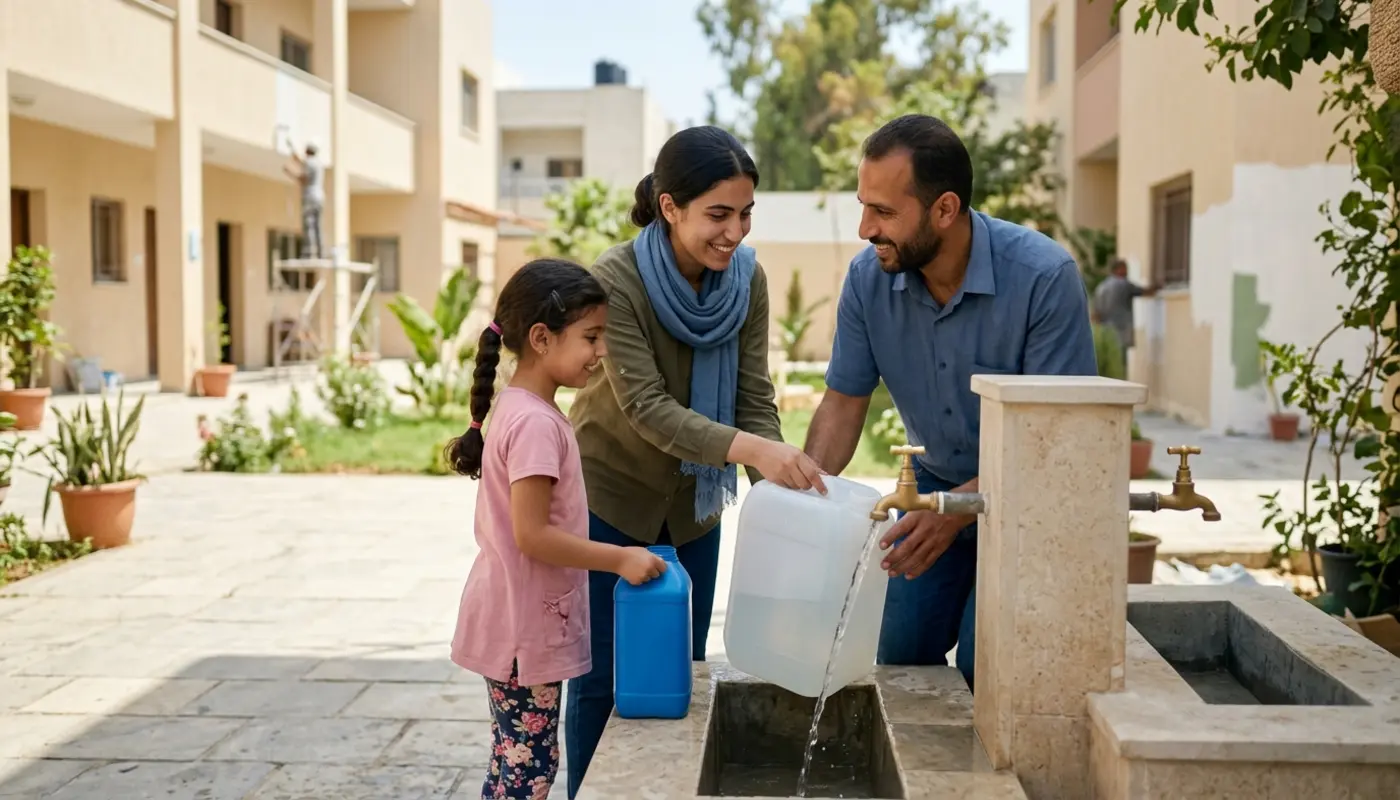
Emergency relief covers essentials such as food, water, medicine, shelter, hygiene items, and cash assistance. Early recovery is the next layer: repairing basic water points, reopening clinics, setting up temporary classrooms, supporting small businesses, and helping families stabilise. Long-term reconstruction is bigger and slower, covering permanent homes, hospitals, schools, utilities, roads, and public services.
The three stages often overlap, especially when needs are severe. That is why donors should avoid assuming every Gaza appeal is a building project. Some funds will rightly go towards urgent survival needs first, because reconstruction only helps if families are able to make it through today.
Key recovery needs include: clean water access; safe family shelter; emergency medical care; school recovery support; rubble clearance planning; and livelihood support grants.
What Infrastructure And Services Need To Be Rebuilt In Gaza
Housing is one of the clearest needs, but it is only part of the picture. Rebuilding homes involves more than replacing walls. Land has to be assessed, rubble needs to be removed safely, damaged utilities must be restored, and families need legal and practical support to return where possible.
Water, sanitation and hygiene services are just as urgent, including wells, tanks, pipes, sewage systems, latrines, wastewater treatment, and waste collection. Without these, disease spreads quickly and daily life becomes exhausting.
Healthcare recovery is another major priority. Hospitals and clinics need repairs, medical equipment, medicines, power, clean water, ambulances, maternity care, rehabilitation services, and mental health support. Education also needs serious attention. Reopening learning spaces can mean temporary classrooms first, then school repairs, teaching materials, teacher support, child protection, and eventually permanent rebuilding.
Roads, communications, electricity, markets, farms, and small businesses matter too, because they allow aid, trade, work, and services to move. In short, humanitarian infrastructure is not glamorous, but it is the plumbing of recovery, sometimes literally.
How To Fund Long-Term Rebuilding Through Trusted Channels
Before donating, check whether the organisation is registered, whether its website is genuine, and whether the appeal explains how funds may be used. Read the wording carefully. A restricted donation must normally be used for the stated appeal or project, while an unrestricted donation gives the organisation more flexibility to meet urgent needs.
Flexibility can be helpful, but clarity matters. Donors should look for published accounts, programme updates, safeguarding information, complaints procedures, named partners where appropriate, and a clear explanation of administration and delivery costs.
Donate Directly uses AI verification and detailed case reviews to help ensure donations reach the right people quickly and transparently. Its direct cash assistance model is especially useful where families need to make their own urgent choices, such as rent, food, medicine, transport, or basic household items.
The platform has delivered over $10 million in direct cash assistance to families worldwide, including verified Zakat eligible campaigns covering Gaza, Pakistan, Yemen, and beyond. That kind of verification matters because donors are not only giving money but also placing trust.
Zakat Versus Sadaqah For Rebuilding Gaza
Zakat and Sadaqah are both forms of Islamic giving, but they are not interchangeable. Zakat is an obligation for eligible Muslims who meet the required wealth threshold, known as Nisab, and it must go to eligible recipient categories. Sadaqah is voluntary and generally broader, so it may be used for many forms of charitable support, depending on the project and Islamic guidance.
If a donor wants to give Zakat for Gaza, the safest approach is to use a clearly marked Zakat programme that confirms beneficiary eligibility and explains how funds are distributed. For a fuller explanation, Zakat for Gaza is a useful next read.
Infrastructure can be more complex. Some scholars allow certain public benefit projects under particular interpretations, while others require Zakat to be transferred more directly to eligible people. That is why donors should not simply relabel any building project as Zakat.
A practical approach is to calculate your Zakat carefully using a reliable Zakat calculator, give it through a confirmed Zakat eligible appeal, and use Sadaqah for wider rebuilding, water, education, healthcare, and community recovery projects.
How Sadaqah Jariyah Can Support Rebuilding
Sadaqah Jariyah means ongoing charity whose benefit continues over time. In a Gaza rebuilding context, this could include a water facility, a school, a clinic, useful medical equipment, a mosque used for worship and community support, or an agricultural project that keeps producing benefit.
Donate Directly also provides Sadaqah Jariyah options such as olive tree planting, water wells, food boxes, and Palestinian date tins, which can sit alongside direct support for families. The important point is that the project should have a real continuing benefit, clear governance, and responsible delivery.
For donors thinking about mosques, schools, and hospitals, it is worth being thoughtful. A mosque may be spiritually and socially important, but water systems, medical care, shelter, and education may be more urgent in a given area. A school can be Sadaqah Jariyah if it continues to benefit children, but it still needs teachers, safety, materials, and access. A hospital can offer ongoing reward through lives saved and treatment provided, yet it also requires power, staff, supplies, and maintenance. Good giving is generous, but it is also practical.
How Gift Aid Can Increase A Gaza Donation
Gift Aid can make a UK taxpayer's donation go further when the receiving charity is eligible. Under the UK scheme, a charity can usually claim an extra 25p for every £1 donated, as long as the donor has paid enough UK Income Tax or Capital Gains Tax and has made a valid declaration. So a qualifying £100 donation can become £125 for the charity without the donor paying more at the time. You can check the official Gift Aid rules for the full details.
Higher and additional rate taxpayers may also be able to claim further tax relief through Self Assessment. Gift Aid is not automatic for every organisation or payment route, so donors should check before giving. If you are unsure, it is better to ask a quick question than tick a box you do not understand. Nobody wants their good deed tangled in tax admin spaghetti.
How UK Muslims Can Set Up A Monthly Donation
Monthly giving is powerful because it gives relief teams predictable support. It also helps donors turn concern into a habit, which is often more sustainable than one large emotional donation followed by silence. Start with an amount you can comfortably afford, even if it feels modest.
A small monthly gift, pooled with many others, can support cash assistance, water access, food, medical needs, shelter, and early recovery work. If your monthly gift is intended as Zakat, make sure it is structured and recorded as Zakat, not simply general Sadaqah.
It is sensible to review your donation every few months. Check receipts, Gift Aid status, appeal updates, and whether the programme still matches your intention. If conditions change and a construction project cannot proceed, the organisation should explain whether funds are held, redirected, or used for related urgent needs.
Long-term support works best when donors stay informed, not anxious. If you want broader ongoing charity options, Sadaqah Jariyah projects can complement emergency and recovery giving.
What Role UK Muslims Can Play Beyond Donating
Money matters, but community effort matters too. UK Muslims can organise mosque collections, workplace fundraisers, student campaigns, family giving circles, and educational events that focus on verified information rather than rumours.
Professionals can offer expertise in medicine, engineering, finance, logistics, education, safeguarding, and communications where suitable channels exist. Community leaders can encourage responsible giving, careful Zakat handling, and transparency from organisations. Du'a, advocacy, and support for affected families in the UK also have a place. Rebuilding Gaza is not a weekend project. It needs steady hearts, steady systems, and steady support.
Frequently Asked Questions
How Can UK Donors Contribute To Rebuilding Gaza Right Now?
Give through a trusted organisation, check how the appeal uses funds, add Gift Aid if eligible, and consider a monthly donation. If giving Zakat, use a programme that clearly confirms Zakat eligibility.
What Infrastructure Needs To Be Rebuilt In Gaza After The Conflict?
Homes, water systems, sanitation, hospitals, schools, roads, power networks, communications, markets, and community facilities all need attention. Recovery also includes livelihoods, cash assistance, and protection services.
Can My Gaza Rebuilding Donation Count As Zakat Or Sadaqah?
It can count as Zakat only if the programme and beneficiaries meet Zakat requirements. Sadaqah is broader and may support relief, recovery, infrastructure, and community projects.
Can Rebuilding Gaza Mosques And Schools Count As Sadaqah Jariyah?
Yes, it may count if the project provides ongoing benefit and is delivered responsibly. Donors should check the project details and seek scholarly guidance if they need a formal ruling.
How Can Gift Aid Increase My Gaza Rebuilding Donation?
If you are an eligible UK taxpayer, Gift Aid can allow the charity to claim an extra 25p for every £1 you donate. The charity and donation route must qualify, and you must have paid enough UK tax.