


Gaza Malnutrition: How Food Aid Saves Lives
23 Oct, 2026Two-thirds of Gaza's population, approximately 1.4 million people, face crisis-level food insecurity, with 466 deaths from starvation and malnutrition recorded since 2024, including 157 children. Around 200,000 people experience emergency-level hunger, and one in eight children under five suffer chronic malnutrition causing permanent physical and cognitive damage. Food aid donations fund emergency parcels, therapeutic nutrition, and community kitchens keeping families alive on the ground.
Food aid saves lives by getting calories, protein, fortified foods, clean water support, and targeted nutrition to families who cannot safely access enough food. UK donors can support Gaza aid and wider direct giving through trusted channels that explain how funds are used.
How Food Aid Saves Lives In Gaza Malnutrition
Food aid saves lives in Gaza by reducing the gap between what families need to eat and what they can actually access. When a household has lost income, shelter, cooking equipment, or access to shops, even simple staples can become life-saving support. Food parcels provide basic calories, while hot meals help families who have no fuel or safe place to cook.
Therapeutic nutrition supports children who are already malnourished and need more than an ordinary meal. The most effective programmes do not treat food as a one-size-fits-all box, because a toddler, a pregnant mother, and an elderly person all have different needs.
Why Gaza Malnutrition Has Reached A Critical Level
Malnutrition has become critical because hunger is not caused by one problem alone. Displacement, damaged infrastructure, interrupted markets, unsafe water, illness, and limited healthcare all pile up at once. Families may receive some food but still struggle to find protein, fresh produce, infant foods, or clean water.
That matters because a body weakened by infection needs more nutrients, not fewer. In plain English, hunger and illness can team up like the worst double act nobody asked for.
What Malnutrition Means In Simple Terms
Hunger means a person does not have enough to eat right now. Food insecurity means a household cannot reliably access enough safe and nutritious food. Acute malnutrition, often called wasting, usually means a child has lost weight quickly or is too thin for their height. Chronic malnutrition, often linked with stunting, develops over a longer period and can affect growth and development.
These terms are related, but they are not identical. That is why good food aid includes both prevention and treatment.
Calories matter, of course, but calories alone are not enough. A diet made mostly of bread or rice may keep someone going for a short time, but it may lack iron, zinc, protein, healthy fats, and vitamins. Children under two are especially vulnerable because their brains and bodies are developing quickly.
Pregnant and breastfeeding women also need extra nutrition. Without it, both mother and baby face greater health risks. This is why fortified foods and specialised nutrition support can be just as important as a standard food parcel.
Who Is Most At Risk From Malnutrition In Gaza
Children under five are among the most at risk because they grow quickly and have small reserves when food becomes scarce. If they develop diarrhoea or another infection, they can lose fluids and nutrients very fast. Infants aged 6 to 23 months are also in a delicate stage because they need safe complementary foods alongside breastfeeding.
Pregnant and breastfeeding women need more energy, protein, and micronutrients than usual, so a weak diet can affect labour, milk supply, and infant health. Displaced families face extra barriers because they may have no kitchen, no fridge, no cash, and no reliable transport to distribution points.
How Food Aid Reaches Families And Children
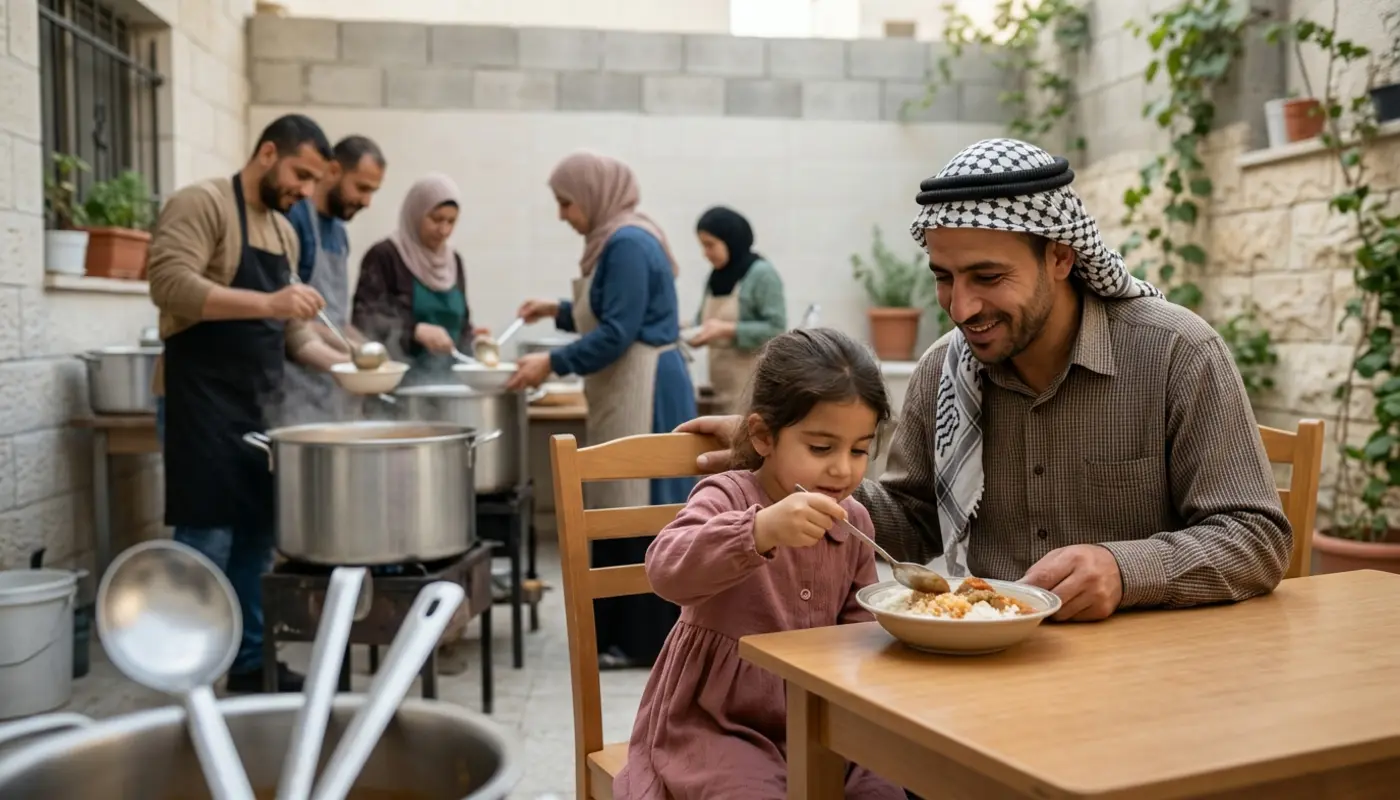
Food aid reaches people in several ways, and each method solves a different problem. Household parcels often include staples such as flour, rice, lentils, oil, tinned food, and other items that last a long time. Community kitchens provide cooked meals, which is vital when families have no fuel or safe cooking space.
Bakeries and flour support can help restore access to bread at scale, while cash assistance can work where markets are functioning and families can safely buy what they need. For more detail on delivery routes, the article on food donations explains how food support can move from donor funding to household relief.
Nutrition treatment is more specialised. Children may be screened by measuring weight, height, and arm circumference, then referred for treatment if they show signs of acute malnutrition. Some children need ready-to-use therapeutic food, a nutrient-dense paste designed to support recovery.
Severe cases with medical complications may need clinical care, therapeutic milk, antibiotics, or stabilisation before ordinary feeding is safe. That is why responsible aid programmes avoid promising that a single box can solve every case.
What Types Of Food Aid UK Donors Can Fund
UK donors can fund several types of support, depending on the programme and current access conditions. Emergency parcels are helpful when families need household staples quickly. Hot meals are especially useful for displaced people who lack fuel or shelter. Therapeutic and supplementary foods support children and mothers who have been identified through nutrition screening.
Water and hygiene support also matters because unsafe water can worsen diarrhoea, and diarrhoea can stop the body absorbing nutrients properly. Common forms of support include emergency food parcels, hot community meals, therapeutic nutrition support, fortified child foods, flour and bread, flexible cash assistance, and clean water support.
Donate Directly supports direct cash assistance as well as emergency and ongoing relief, using AI verification and detailed case reviews to help funds reach the right people quickly. The platform has delivered over $10 million in direct cash support to families worldwide, with verified campaigns eligible for Zakat covering Gaza, Pakistan, Yemen, and beyond.
This matters because cash can be flexible when needs change quickly, while food boxes, hot meals, and nutrition support answer more immediate hunger needs. The best response is often a mix, not a magic button.
How UK Donors Can Give Safely
Safe giving starts with checking who you are donating to and how the money will be used. Look for clear information about the organisation, its delivery model, financial reporting, safeguarding, and current access limitations. Avoid pressure tactics, vague social media payment links, or claims that guarantee a specific outcome for a specific amount.
Humanitarian delivery depends on access, procurement, logistics, staffing, and local conditions, so honest reporting is a good sign. If a platform explains verification, case review, and transparency, that helps donors make a calmer decision in an emotional moment.
Many UK donors choose cash donations rather than sending food from home because professional responders can buy, move, and distribute supplies according to changing needs. Sending tins from your kitchen may feel personal, but transport, customs, storage, suitability, and timing can make it less useful.
A trusted cash donation can support food, water, fuel, nutrition products, or local purchasing where available. Donate Directly charges a 0% platform fee, which helps donors understand what is not being taken by the platform itself. For giving for Gaza, donors can also review Zakat eligible giving before deciding how to allocate funds.
Zakat And Sadaqah For Gaza Food Aid
For UK Muslims, Gaza food aid may be given as Sadaqah. In some cases, it may also be suitable for Zakat if the recipients and allocation process meet Islamic requirements. Zakat is an obligation for eligible Muslims and must be distributed to valid recipient categories. Sadaqah is voluntary charity and is generally more flexible.
Donor intention matters, but so does the charity's process for separating, recording, and distributing Zakat funds. If you are unsure, check the organisation's Zakat policy and ask a trusted scholar for personal religious guidance.
It is also worth being careful with the term Sadaqah Jariyah. A food parcel is usually immediate relief, which is deeply valuable, but it is not automatically an ongoing charity. Sadaqah Jariyah normally refers to a benefit that continues over time, such as water wells, olive tree planting, or other long-lasting support.
Donate Directly offers Sadaqah Jariyah options alongside emergency relief, so donors can separate urgent feeding from giving over the longer term. Both can be meaningful, but they are not the same thing.
How Gift Aid Can Increase A Gaza Donation
Gift Aid can increase an eligible donation made by a UK taxpayer because a qualifying charity can claim extra money from HMRC. In simple terms, for every £1 donated, the charity may be able to claim an additional 25p if the donor has made the correct declaration and paid enough UK tax.
It does not come out of the donor's bank account as an extra charge. The rules can be checked on GOV.UK Gift Aid guidance. Donors should only tick Gift Aid if they meet the tax conditions, because the declaration is not just a decorative tick box.
Why Transparency Matters When Food Aid Saves Lives
People want to know that their donation is doing something real, especially during a crisis that feels overwhelming. Transparent platforms should explain what type of support is being funded, who may receive it, and what checks are in place.
Donate Directly uses verification powered by AI and case reviews to support fast, direct assistance without middlemen or delays. That does not remove every difficulty on the ground, because no organisation can simply wish away access challenges. It does, however, give donors clearer information and a more direct route to families in need.
Good giving is both compassionate and practical. Food aid helps prevent families from skipping meals, reduces the risk of children deteriorating further, and supports recovery when paired with healthcare and clean water. The most helpful donors are not always the loudest ones online. Often, they are the people who check carefully, give consistently, and choose programmes that match real needs rather than assumptions.
Frequently Asked Questions
How Severe Is The Malnutrition Crisis In Gaza Right Now?
It is extremely severe, with large numbers of people facing crisis or emergency levels of food insecurity. Children, pregnant women, and breastfeeding mothers face some of the greatest risks.
Who Is Most Affected By Malnutrition In Gaza Today?
Children under five, infants aged 6 to 23 months, pregnant and breastfeeding women, and displaced families are especially vulnerable. Illness, unsafe water, and lack of healthcare make the danger worse.
What Types Of Food Aid Can UK Donors Fund?
UK donors can support food parcels, hot meals, flour and bread, therapeutic nutrition, fortified foods, clean water, and cash assistance. The best option depends on current needs and delivery access.
Can My Gaza Food Aid Donation Count As Zakat Or Sadaqah?
It can usually be given as Sadaqah, and it may count as Zakat if the recipients and allocation process meet Islamic requirements. Always check the charity's Zakat policy if that is your intention.
Can Food Aid For Gaza Count As Sadaqah Jariyah?
Immediate food aid is not automatically Sadaqah Jariyah because it usually provides short-term relief. Projects that last longer, such as water infrastructure or tree planting, are more commonly linked with ongoing charity.