


Gaza Amputees: How Your Donation Helps With Limbs and Rehab
22 Oct, 2026Gaza is facing an unprecedented amputation crisis, with between 5,000 and 6,600 people estimated to have undergone limb amputations since October 2023, according to the World Health Organisation. Roughly 20% to 25% of all amputees are children, giving Gaza one of the highest concentrations of child amputees per capita in modern history. Donations fund prosthetics, rehabilitation, and long-term medical support for survivors.
For UK donors, the practical question is what help actually reaches people. Donate Directly supports verified Gaza appeals through Gaza giving and its wider direct giving model.
Why Amputee Care Is Urgent In Gaza
Amputation is not the end of treatment. For many survivors, it is the beginning of a long recovery pathway involving wound care, pain management, physiotherapy, mobility training, prosthetic fitting and emotional support. World Health Organisation reporting has also highlighted tens of thousands of life-changing injuries requiring rehabilitation for months or years, not only emergency care in the first few days.
The need is urgent because hospitals, rehabilitation centres, transport routes, specialist staff and medical supplies are all under extreme pressure. When services are interrupted, a person may wait longer for assessment, fitting or repair. That delay can affect independence, schooling, work and daily dignity.
The figures can vary because different reports count different things: reported amputations, assessed patients, severe limb injuries or people already fitted with a permanent prosthesis. That is why responsible appeals should use dated figures and explain what they mean. A person may be counted as an amputee long before they receive a suitable limb, and a fitted prosthesis still needs follow-up.
There is also a shortage of trained prosthetists and rehabilitation specialists, so the challenge is not simply buying limbs off a shelf. It is closer to building a support system around each person, which is less flashy than a headline but far more useful.
What A UK Donation To Gaza Amputee Care Can Fund
A UK donation to Gaza amputee care usually supports a wider medical and rehabilitation programme rather than one labelled item for one named person. That may sound less tidy, but it is how serious humanitarian work often functions: funds are pooled to pay for staff, equipment, logistics, patient assessments, repairs and follow-up care.
Donate Directly uses AI verification and detailed case reviews to help direct support quickly and transparently, with no middlemen, no delays and a 0% platform fee. Across its work, the platform has delivered over $10 million in direct cash assistance to families worldwide, including verified Zakat eligible campaigns in Gaza, Pakistan, Yemen and beyond.
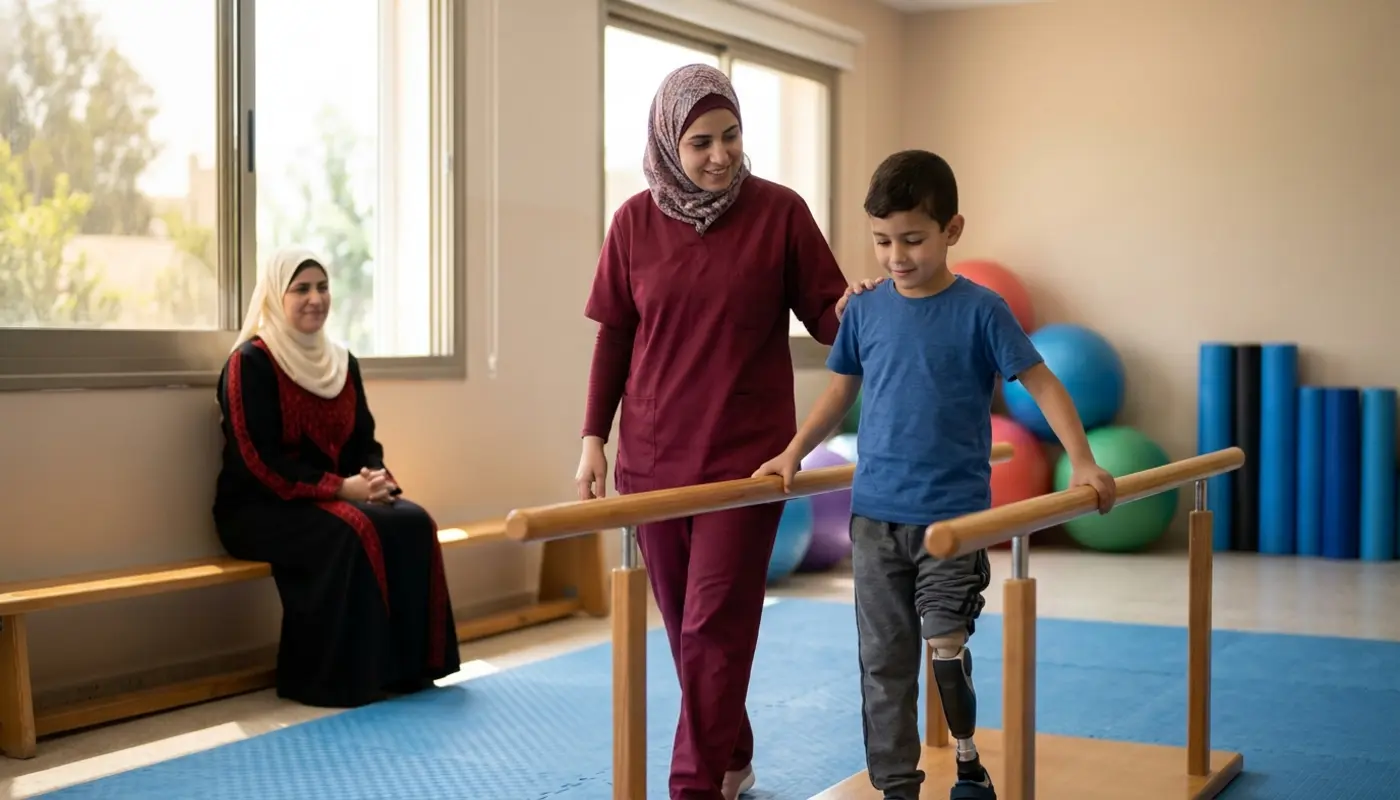
Medical Assessment And Residual Limb Care
Before anyone can use a prosthetic limb safely, clinicians need to assess their overall health, wound healing and mobility. The residual limb, meaning the part of the limb that remains after amputation, may need dressing, shaping, infection prevention and pain support. Some people need follow-up surgery or specialist treatment before fitting can even be considered.
Donations can help cover clinical appointments, medical supplies, referral costs and safe transport where available. This early care is not glamorous, but without it a prosthesis may be painful, unsafe or impossible to use.
Prosthetic Limbs, Fitting And Adjustments
A prosthetic limb is not a one size fits all product. It normally involves assessment, measurement, casting or digital scanning, socket design, component selection, fitting, alignment and training. The socket is especially important because it connects the person's body to the prosthesis, and even a small pressure point can cause skin damage.
After fitting, adjustments are often needed as swelling changes, wounds heal, muscles strengthen or the person becomes more active. Your donation may therefore support not only the limb itself, but also the skilled work that makes it usable in real life.
Repairs matter too. Components wear out, straps break, sockets loosen and feet or knees may need replacing. In a stable setting, this would be annoying. In Gaza, where movement, supplies and services can be restricted, a broken part can mean losing mobility altogether. That is why good amputee care includes maintenance, not just the first fitting. It also explains why a low-cost limb with no repair plan is rarely enough.
Mobility Aids While People Wait
Not everyone can receive a prosthesis straight away. Some people are medically unready, some need more physiotherapy first, and others are waiting for specialist components or fitting appointments. In the meantime, donations may fund crutches, wheelchairs, walking frames, orthoses, pressure-relieving cushions or other assistive devices.
Orthoses are braces or supports that help stabilise weak or injured parts of the body. These aids can help people move safely, attend appointments, care for children, return to school or simply reach a bathroom without relying on someone every time.
Common areas your donation may support include: clinical assessment costs, residual limb care, prosthetic limb fitting, physiotherapy recovery sessions, mobility aid support, child prosthetic replacements and transparent impact reporting.
Rehabilitation Support Beyond The Prosthesis
Rehabilitation is the bridge between receiving medical treatment and regaining daily function. Physiotherapy before fitting helps maintain strength, balance and joint movement while reducing the risk of stiffness and contractures. A contracture happens when muscles or joints become tight and limit movement, which can make walking or fitting a limb much harder.
Physiotherapists also teach safe transfers, such as moving from a bed to a chair, and help people prepare the residual limb for future fitting. It is practical, patient work, often involving small gains that add up over time.
Once a prosthesis is fitted, training begins again. A person may need to learn how to stand, balance, walk, climb steps, manage uneven ground and avoid falls. Using a prosthetic limb takes energy, confidence and practice, especially after trauma.
Rehabilitation may also include family education, peer support and psychosocial care, which means emotional and social support after distressing experiences. Recovery is physical, but it is also deeply human.
Why Children Need Ongoing Prosthetic Replacements
Children are not small adults, and prosthetic care for them needs special attention. As a child grows, their limb shape, height, weight and activity level change. A socket that fits well today may become painful or unsafe months later, while components may no longer match the child's movement or development.
Regular review is essential because a poor fit can lead to skin injury, abnormal walking patterns, loss of confidence and reduced participation in school or play. In plain English: children grow, and their prosthetics have to keep up.
Child amputee rehabilitation should also support family life. Parents and carers may need advice on safe movement, pain signs, device care and when to ask for adjustments. School reintegration matters too, because mobility is linked to learning, friendships and a sense of normal routine.
Donations that support children may therefore fund repeat assessments, repairs, replacement parts, physiotherapy and family guidance over many years. A one-off gift can still help, but long-term programmes are what turn help into sustained recovery.
How UK Charities Deliver Aid Into Gaza
UK-linked humanitarian support usually reaches Gaza through a chain of local teams, medical facilities, international coordination systems and approved delivery routes. Charities may work with local healthcare staff, rehabilitation centres, procurement partners, logistics teams and specialist medical suppliers.
Delivery can be slowed by damaged infrastructure, shortages, insecurity, border restrictions and the need to prioritise urgent cases. That does not mean donations are pointless; it means good organisations need flexible, well-managed funding. The boring bits, such as storage, transport approval and patient lists, are often what make the lifesaving bits possible.
Donate Directly's model focuses on getting cash assistance directly to people in need where verified, rather than letting support disappear into layers of administration. For donors wanting wider Gaza support alongside medical care, its verified medical appeal can sit alongside essentials such as food, shelter and family cash assistance.
Many Muslim donors also ask whether amputee care can be Zakat or Sadaqah. Where recipients are verified as eligible, medical and recovery support may be suitable for Zakat, while Sadaqah can be given more broadly. If you are unsure, use a trusted eligibility process rather than guessing.
How To Give Safely From The UK
Safe giving starts with checking who you are donating to. Registration matters, but it is not the only thing to look for. Check the legal charity name, charity number, trustee information, latest accounts, annual report, appeal wording and whether the payment page clearly belongs to the organisation or an authorised fundraising platform.
England and Wales, Scotland and Northern Ireland have different charity regulators. Donors in England and Wales can check the Charity Commission register, Scotland uses OSCR, and Northern Ireland uses CCNI. GOV.UK provides a charity register search and signposts the separate registers where needed.
Be careful with pressure tactics, personal bank accounts, vague claims and promises that sound too neat, such as guaranteeing that your exact £50 buys a complete limb for one named person unless the organisation can prove that model. Strong charities explain restrictions clearly, including whether an appeal is Gaza specific or part of a broader emergency fund.
If you are giving Islamic charity, you may also want to check whether the donation is Zakat, Sadaqah or Sadaqah Jariyah. Donate Directly offers a Zakat calculator and verified Zakat eligible campaigns, which can help donors avoid the classic late-night maths wobble.
Gift Aid, Tax Efficient Giving And Payment Options
Gift Aid can increase eligible UK charity donations by allowing the charity to claim an extra 25p for every £1 donated. To use it, you normally need to make a Gift Aid declaration and have paid enough UK Income Tax or Capital Gains Tax to cover the amount reclaimed.
Higher or additional rate taxpayers may be able to claim extra relief through their tax return, but personal tax rules can vary, so it is sensible to check official HMRC guidance if needed. For a deeper faith-based explanation, Donate Directly's Gift Aid guide explains how Gift Aid can sit alongside charitable giving.
Use secure payment routes, such as the charity's official website, a recognised platform, debit card, credit card or verified bank details. Avoid sending money to personal accounts unless you can independently verify that it is an authorised collection route, and even then, be cautious.
Keep receipts, confirmation emails and any Gift Aid records. If your donation is restricted to amputee care or Gaza medical support, save the wording from the appeal page at the time you donate. It is not being fussy; it is being responsible with an amanah, a trust.
How To See Your Donation's Impact
A credible organisation may not be able to tell you exactly which person received your donation, especially in a pooled emergency programme. What it should be able to explain is what the programme does, who delivers it, how funds are allocated and what results have been achieved.
Look for updates that mention people assessed, prostheses supplied, repairs completed, physiotherapy sessions delivered, mobility aids distributed, staff trained and follow-up visits. Good reporting should also be honest about delays, access problems and changes in plans. Perfect certainty is rare in emergency aid, but silence and vagueness are not good signs.
Impact is not only a photo or a short quote. It can be a child returning to school, a parent moving independently, a teenager learning to walk with a new prosthesis, or someone receiving a wheelchair while waiting for fitting.
Donate Directly also provides Sadaqah Jariyah options such as olive tree planting, water wells, food boxes and Palestinian dates tins, which support different forms of relief and ongoing benefit. For amputee care specifically, the most meaningful impact is often long term: safer movement, fewer complications, restored confidence and better chances of rebuilding daily life.
Frequently Asked Questions
How Can UK Donors Help Gaza Amputees Right Now?
UK donors can support verified medical and rehabilitation appeals that fund prosthetics, physiotherapy, mobility aids, repairs and long-term care. Choose secure donation routes and check the charity's registration, reports and Gaza programme details.
What Medical Support Do Gaza Amputees Need Most Urgently?
Many need wound care, infection prevention, pain support, residual limb preparation, physiotherapy and safe mobility aids. Prosthetic fitting is vital, but it works best when the wider rehabilitation pathway is in place.
Can My Donation For Gaza Amputees Count As Zakat Or Sadaqah?
It can count as Sadaqah, and it may count as Zakat when the recipient is properly verified as Zakat eligible. Use a platform or charity that explains its eligibility checks clearly.
How Can Gift Aid Increase My Donation For Gaza Amputees?
If you are an eligible UK taxpayer, Gift Aid can let a charity claim an extra 25p for every £1 you give. You must complete a declaration and have paid enough qualifying UK tax.
Can Supporting Gaza Amputees Count As Sadaqah Jariyah?
Medical support is usually given as Sadaqah, but if it creates lasting benefit, many donors hope for ongoing reward. Dedicated Sadaqah Jariyah projects, such as wells or trees, are separate options designed specifically for continuing benefit.