


Education in Gaza: Helping Children Get Back to School
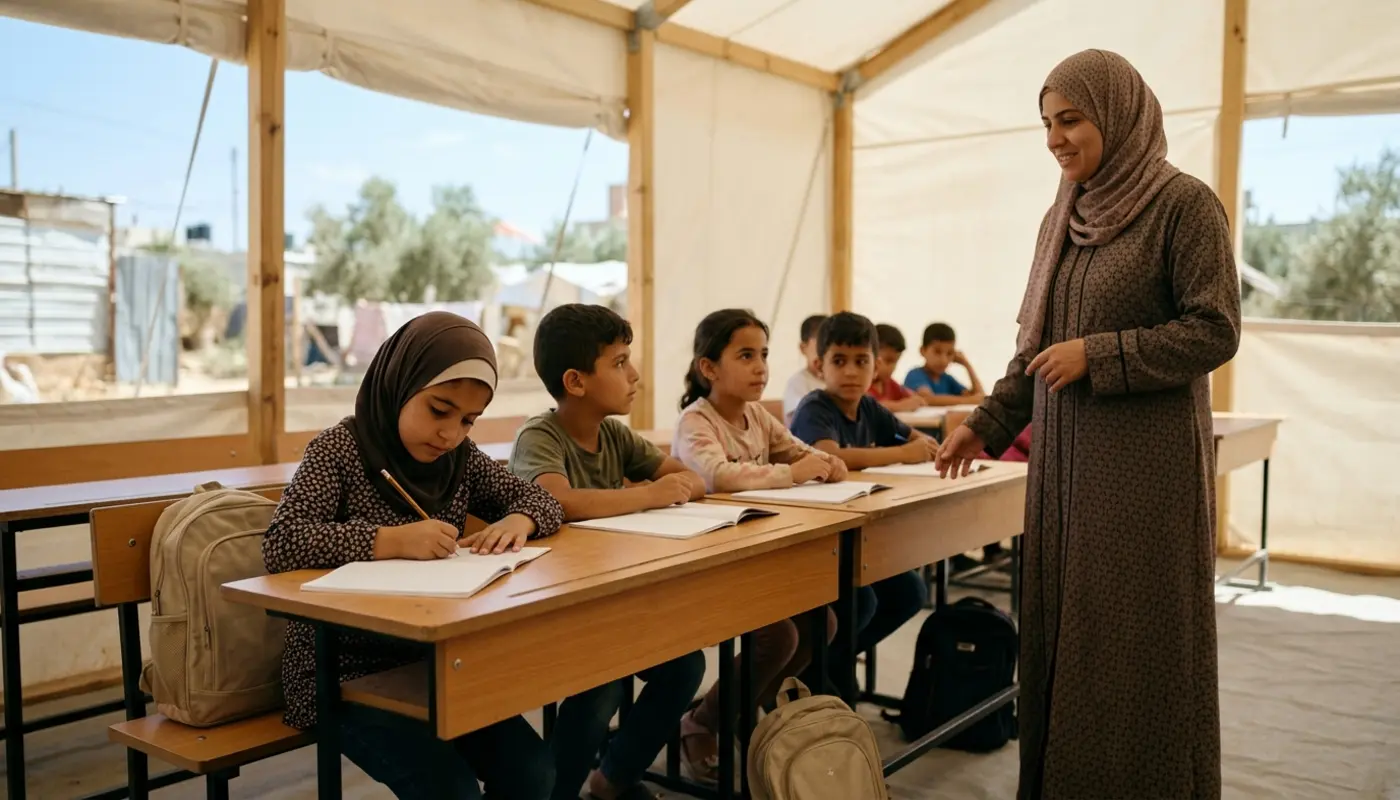
29 Oct, 2026More than 500,000 children in Gaza have returned to temporary learning spaces after nearly three years of disrupted schooling, yet nearly 98% of school buildings have been damaged or destroyed. Around 200,000 school-age children still cannot access structured learning due to displacement, supply blockages, and damaged infrastructure. Donations fund emergency education centres, learning materials, and trained teachers supporting children through tent-based learning programmes.
UK donors can help by giving through verified programmes, such as Donate Directly, and by supporting focused Gaza support with clear reporting.
Direct Answer: How UK Donors Can Help Children Get Back To School In Gaza
UK donors can help children get back to school in Gaza by funding safe learning spaces, school supplies, teacher support, psychosocial care, and longer-term school rehabilitation. The best starting point is to choose a charity or platform that explains exactly what the education programme covers, how funds are restricted, who receives support, and how delivery is checked. If you are giving Zakat, make sure the appeal clearly says it is Zakat eligible and that funds are handled according to an appropriate Zakat policy. If you are a UK taxpayer, Gift Aid may increase the value of your donation when the receiving organisation is eligible and you meet HMRC rules. In plain English, do not rush just because the need is urgent. Urgency matters, but so does making sure the help actually reaches children.
Why Education In Gaza Has Been Devastated
Education in Gaza has been hit from several directions at once: damaged school buildings, mass displacement, shortages of materials, reduced teacher availability, and the loss of ordinary routine. UN-linked reporting in 2026 described hundreds of temporary learning spaces and large numbers of children still outside structured education, although exact figures vary by reporting date and definition. Some reports count only supported learning centres, while others include private, community-led, or temporary classes. That is why statistics should always be read with their date and source in mind. Still, the overall picture is painfully clear: children need emergency learning now and proper school recovery for the years ahead.
Damage To Schools And Learning Infrastructure
When people hear that a school has been damaged, it can mean many different things. One building may have broken windows and missing furniture, while another may need major structural repair before anyone can safely enter. Some schools may be standing but unavailable because they are being used as shelters or because the surrounding area is not safe for regular attendance. Others require full reconstruction, which is a long and expensive process involving planning, materials, engineers, permissions, and reliable access. For children, the practical result is the same: fewer safe classrooms, fewer books, fewer desks, and far less normality. Learning algebra is hard enough without doing it in a tent during a humanitarian crisis.
Displacement, Access, And Lost Routine
Education is not just a building with a bell at the end of the lesson. Children need stable routes to school, a predictable timetable, teachers who can keep coming back, and families who know where they will sleep that week. Displacement makes all of this harder. A child may start lessons in one area, move again, lose their learning materials, then struggle to rejoin a class at the same level. Teachers are also affected, often dealing with loss, displacement, and exhaustion while trying to support pupils through interrupted curricula. Temporary learning spaces help restore a rhythm, but they are an emergency bridge, not a full replacement for permanent schools.
What Children In Gaza Need Most For Learning
The greatest educational needs are both basic and deeply human. Children need somewhere safe to learn, materials to write and read with, trained adults who can teach calmly, and support for the emotional strain they have carried. Education in emergencies also protects children by giving them routine, trusted supervision, peer contact, and a place where concerns can be noticed and referred. That does not mean a lesson fixes everything. It means structured learning can create a small island of order in a very difficult sea.
Key learning needs include: safe learning spaces, books and stationery, teacher training support, child wellbeing care, accessible learning materials, school furniture supplies, and digital learning access.
Inclusive education matters here too. Younger children may need play-based learning and basic literacy support. Adolescents may need help with missed exams, digital access, or vocational pathways. Children with disabilities may need adapted materials, accessible spaces, mobility support, or individual attention. Girls and displaced learners may face added barriers linked to safety, privacy, family responsibilities, and changing living conditions. A serious Gaza education programme should think beyond simply handing out notebooks, useful as notebooks are. The real goal is learning continuity, child protection, and a route back into proper schooling.
What A Gaza Education Donation Can Provide
A well-designed education donation can support temporary classrooms, teaching kits, stationery, books, school bags, desks, seating, teacher stipends where permitted, training, and psychosocial activities. It may also fund repairs to damaged learning spaces, child-friendly areas, digital learning tools, or transport support where access allows. The exact use depends on the project design, local conditions, programme restrictions, and whether the donation is marked for emergency education, reconstruction, Zakat, or general relief. That is why restricted giving matters. If a donor gives to education, they should be able to see whether the money supports immediate learning, long-term rebuilding, or both.
Donate Directly uses verification technology and detailed case reviews to help ensure funds reach the right people quickly and transparently. Its model focuses on direct cash assistance with no middlemen, no delays, and a 0% platform fee, while also supporting verified Zakat eligible campaigns across Gaza, Pakistan, Yemen, and beyond. For families under pressure, direct cash can help cover urgent education-related needs such as transport, supplies, connectivity, or basic household stability that allows a child to keep learning. The platform has delivered over $10 million in direct cash assistance worldwide, which shows why transparency and verification are not fancy extras. They are the nuts and bolts of accountable giving.
How UK Donors Can Fund School Rebuilding Responsibly
School rebuilding is usually a long-term commitment, not a quick weekend DIY job with a generous uncle and a ladder. It can involve safety assessments, rubble clearance, engineering work, furniture, sanitation, electricity, teacher planning, and coordination with local education authorities or community groups. In the meantime, emergency learning spaces are still essential because children cannot simply wait years for permanent classrooms. UK donors can support both streams by choosing clearly labelled appeals and checking whether funds go towards immediate education access, rehabilitation, or full reconstruction. If a project cannot proceed because access changes, a responsible organisation should explain whether funds are held, redirected with donor consent, or used under published alternative use terms. Clear contingency planning is a sign of good governance, not pessimism.
Before donating, check whether the organisation explains its delivery model, safeguarding approach, partner checks, and impact reporting. Useful reporting includes the number of children reached, learning spaces supported, teachers trained, materials distributed, attendance patterns, and repair milestones. Photographs can be helpful, but they are not a substitute for data. UK government guidance for charities working in the Middle East also stresses due diligence, risk awareness, and appropriate controls, which are sensible points for donors to understand too. A careful donor is not being cynical. They are protecting the trust placed in them by the people who gave and the children who are meant to benefit.
Zakat And Sadaqah For Gaza Education
For UK Muslims, the big question is often whether education in Gaza can be funded through Zakat, Sadaqah, or Sadaqah Jariyah. Zakat is an obligation with specific eligibility rules, so donors should not assume every school project automatically qualifies. Some education support may be Zakat eligible where funds are directed to eligible recipients and managed according to accepted scholarly guidance. Other activities, especially buildings, equipment, or broad infrastructure, may be more suitable for Sadaqah unless a trusted Zakat policy confirms otherwise. If your intention is Zakat, use a clearly labelled appeal, keep the receipt, and check the receiving organisation's policy before giving.
Sadaqah is generally more flexible and can support a wider range of educational needs, including supplies, teacher support, child wellbeing, and school recovery. If you need to work out your obligation first, a Zakat calculator can help you estimate what is due before choosing the right fund. Donate Directly also provides Zakat eligible campaigns for Gaza and other areas, with verification designed to support transparent distribution. For a wider explanation of faith-based giving and UK tax considerations, the Gift Aid guide is a helpful next read.
Can Education Support Count As Sadaqah Jariyah?
Education can be one of the most meaningful forms of ongoing charity when it creates lasting benefit. A repaired classroom, reusable learning materials, a durable learning centre, teacher training, or a sustained education programme may continue helping children long after the original donation is made. That is the heart of Sadaqah Jariyah: ongoing benefit, not just a one-off moment. Still, the label depends on the nature of the project, the donor's intention, and accepted Islamic guidance. Donate Directly offers Sadaqah Jariyah products such as olive tree planting, water wells, food boxes, and Palestinian dates tins, showing how different charitable actions can be designed for continuing benefit or practical relief. For education specifically, donors should ask whether the project is durable, repeatedly used, and clearly described as suitable for ongoing reward.
How Gift Aid Can Increase A Gaza Education Donation
Gift Aid is a UK tax relief that can increase eligible charitable donations. In simple terms, a qualifying UK charity can usually claim an extra 25p for every £1 donated, provided the donor has paid enough UK Income Tax or Capital Gains Tax to cover the claim. So, a £100 eligible donation could become £125 to the charity. Higher rate and additional rate taxpayers may also be able to claim extra relief through Self Assessment or an adjusted tax code. The official GOV.UK Gift Aid guidance explains the rules in more detail.
Gift Aid and Zakat are separate concepts. A donation may be religiously intended as Zakat and still be processed with Gift Aid if the charity is eligible and the donor meets HMRC conditions, but donors should check how the charity treats the additional amount. You should not tick the Gift Aid box if you have not paid enough qualifying tax. You should also be cautious with informal fundraisers, overseas recipients, or appeals that do not offer a valid Gift Aid declaration. If you are giving Zakat through a dedicated route such as 100% Zakat, check whether the Gift Aid treatment is explained clearly before completing the donation.
How To Make A Responsible Donation Decision
A responsible donation decision starts with matching your intention to the right type of support. If your priority is immediate learning, look for temporary learning spaces, supplies, teacher support, and psychosocial care. If your priority is long-term recovery, look for rehabilitation, school furniture, reconstruction planning, and durable education systems. If your priority is Zakat, check eligibility before giving. If your priority is maximising value as a UK taxpayer, complete Gift Aid only when you are eligible. Most importantly, look for clear updates after you donate. Education recovery is not a single delivery photo; it is attendance, teaching, safety, continuity, and progress over time.
Frequently Asked Questions
How Can UK Donors Help Get Children Back To School In Gaza?
UK donors can support safe learning spaces, school supplies, teacher support, psychosocial care, and school rehabilitation through verified education programmes. Choosing transparent appeals with clear reporting helps donations reach the right purpose.
What Are The Greatest Educational Needs Facing Children In Gaza?
Children need safe places to learn, books, stationery, trained teachers, inclusive support, and emotional wellbeing care. Temporary learning spaces help restore routine while longer-term school rebuilding continues.
Can My Gaza Education Donation Count As Zakat Or Sadaqah?
It may count as Zakat if the programme, beneficiaries, and fund controls meet accepted Zakat requirements. Sadaqah is generally more flexible and can support a wider range of education needs.
How Can Gift Aid Increase My Gaza Education Donation?
If you are an eligible UK taxpayer and donate through a qualifying charity, Gift Aid can usually add 25p for every £1 donated. Always make sure you have paid enough UK tax before ticking the Gift Aid box.
Can Funding Education In Gaza Count As Sadaqah Jariyah?
It can be considered Sadaqah Jariyah when it creates ongoing benefit, such as durable learning resources or long-term education facilities. Check the project details and seek trusted Islamic guidance if you are unsure.